Your Semi-Unique Wedding
Ceremony
Categories: | Wedding Ceremony | Wedding Legals |
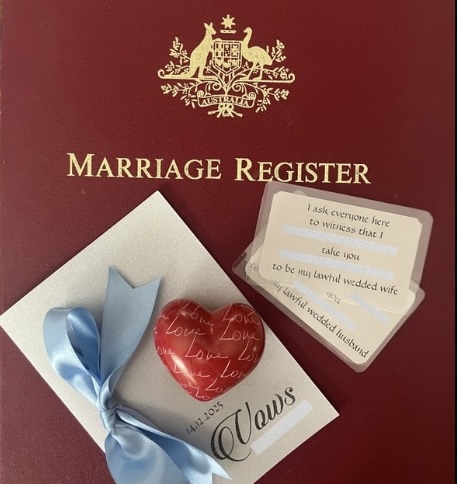 As a marriage
celebrant, I hear the word unique on a
daily basis. Couples wanting a unique ceremony, or
proudly announcing that their ceremony will be.
Something that many celebrants, myself included,
proudly declare we deliver for couples.
As a marriage
celebrant, I hear the word unique on a
daily basis. Couples wanting a unique ceremony, or
proudly announcing that their ceremony will be.
Something that many celebrants, myself included,
proudly declare we deliver for couples.
However, let's be honest, there are legal
constraints. And those constraints mean that every
marriage ceremony is semi-unique, and can only
ever be semi-unique if you also want it to
create a legal marriage between you.
There are good, solid, reasons why this is so,
reasons that lie in three age-old aspects of
marriage ceremonies
- the mandatory legal components of the ceremony
- logical flow of ceremonies, and
- the time-honoured traditional structure of a
wedding ceremony.
The
Mandatory Legal Components
The Monitum—the formal statement that must be read or recited by the authorised celebrant, and only the celebrant —has to precede the legal vows. These two components are non-negotiable, as is the order. The wording of the Monitum is set in stone. However boring and legalistic you might think it is, fiddle it at your peril.
There is a teeny, tiny bit of leeway with the legal vows, but tightly controlled leeway because any changes to words must mean exactly the same as the version in the Act. Every celebrant has been told, in no uncertain terms, what the acceptable changes are - simple things like the use of you instead of thee.
Legally, the only real choice you have is that of the word you're going to use to describe your married status. Husband. Wife. Spouse. Partner-in-Marriage.
So while the heart of your ceremony can be tailored to you, your personalities, your style, your story, these legal necessities, without which your marriage will not be valid, ensure a common thread runs through every wedding.
The Logical
Flow of a Ceremony
The
Traditional Structure
As I often say, "Keep the tradition, change the narrative." However, be aware that weddings often follow trends, which means your version of a reshaped tradition might not be entirely unfamiliar to your guests, and may feel a tad performative if you haven't managed to link it to something that is unique to one or both of you, or to family relationships or cultural influences.
Creating
Your Semi-Unique Ceremony
- Embrace the legal components and logical flow as they are, and then use your creativity to reshape the traditions.
- Choose readings, music, or symbolic rituals
that reflect your journey together and do not
obscure your authentic selves
- Put your heart and soul into your personal vows with promises that are truly yours.
Semi-unique turns out to be the best possible outcome. Clearly legal, solemn enough to reflect the immense change in status that the ceremony creates, but, balancing the required components with your unique narrative, a ceremony that feels both familiar and fresh.
A quick
word about some other legal requirements
- Names not said out loud:
- Not using your full legal names. Even if you hate your full legal name, it must be used in the ceremony at least once in order that everyone can be absolutely sure who is getting married. The safest option is full names in the legal vows.
- Your celebrant not identifying themselves verbally as the authorised celebrant by using their legal names. Business names, however cute, don't qualify
- Not being sober
- Any of the five main players in the ceremony (the two of you, your two legal witnesses, or your celebrant) being under the influence of legal or illegal substances, including booze, street drugs, or prescribed medications
- Witnesses absent or unknown
- Witness lotteries can be great fun, but must be done before the ceremony starts so they, you, and your celebrant know exactly who they are, and can be sure they will be present for the whole ceremony
- Real reluctance or unfortunate jokes
- If either of you says or does anything during the ceremony that might suggest that your consent to the marriage is not real, or has been made under pressure, your celebrant is legally obliged to stop the ceremony immediately. No consent. No marriage.
- And that includes if one of you has had the
ceremony sprung on you
Related
information
- Being a Witless Witness is not an option!
- Booze,
Pills, and your Wedding
- How to have a non-legal wedding
- The
Importance of Consent: Why no-one can force
you to marry, to kiss in your wedding, or to
have sex afterwards
- The Monitum in a Civil Marriage
- What
your celebrant says in your wedding - law and
custom
- Witnesses and weddings
- Your
Marriage Certificate(s)